Baumkronenpfad Beelitzer Heilstätten
Just beyond Berlin's city limits, the former Beelitz sanatorium grounds possess a rare quality: the sense that time has halted and let everything else carry on around it. Crumbling pavilions, ancient forest and more than a century of layered history converge in a place that is at once unsettling and deeply compelling.
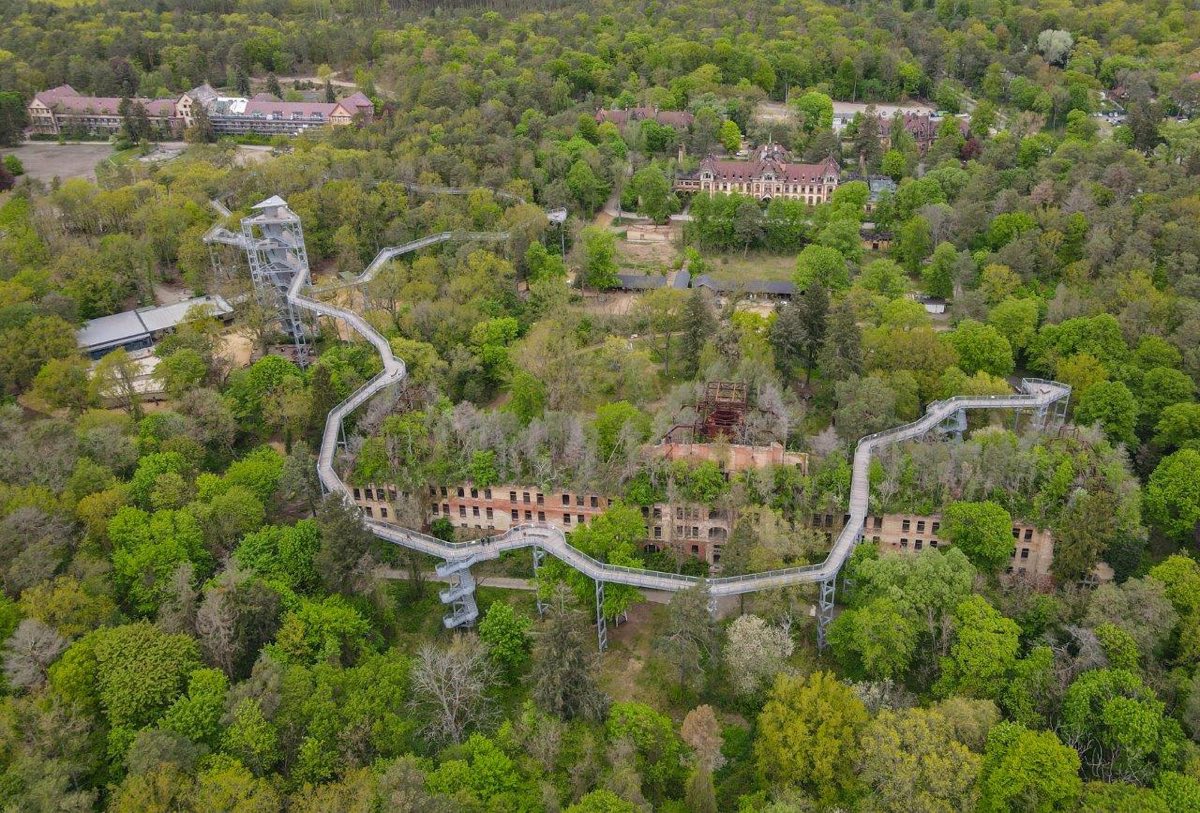
Those who have walked the grounds of Beelitzer Heilstätten will recognise the atmosphere at once. The buildings have been left largely to their own fate, their gradual decay woven into the character of the place. Rambling gardens and old-growth forest envelop the ruins, drawing visitors through a landscape shaped by some of the most turbulent chapters of the twentieth century. History, nature and architecture have merged here into something that resists easy description.
Above the Forest Floor
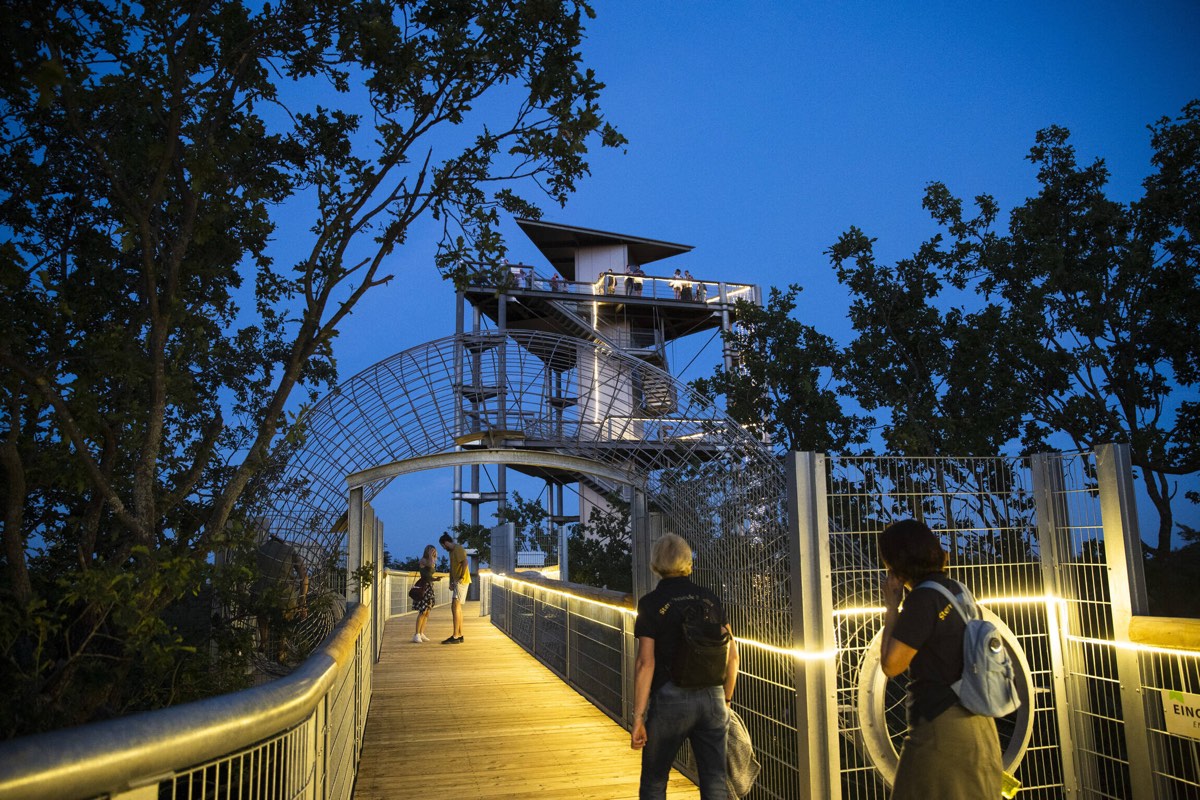
In September 2015, Brandenburg's first treetop walkway was inaugurated on the grounds of this former women's tuberculosis ward. Elevated some 23 metres above the ground, the path stretches for more than 300 metres past the overgrown ruins of a sanatorium pavilion, offering a perspective on the estate impossible to appreciate at ground level. For a broader sweep across the surrounding countryside, the 36-metre observation tower is the natural conclusion to the walk.
A Sanatorium at Berlin's Edge
The forest of Beelitz draws Berliners out of the city today for walks, runs and a respite from urban life. At the close of the nineteenth century, though, this 140-hectare woodland was established for an entirely different form of recovery. The densely packed tenements of Berlin were producing tuberculosis at an alarming rate, and the clean forest air some 50 kilometres from the city centre was seen as an essential part of treatment. Patients were sent here to convalesce in conditions far removed from the overcrowded streets that had made them ill.
A Settlement in Its Own Right
By 1928 the complex had grown considerably. A surgical hospital, a laundry and a small shopping arcade with six premises were added to the original grounds. Among the tenants of this arcade were a cobbler, a stationer, a soap workshop, a bakery and a tailor. At its height, the sanatorium could accommodate 1,300 patients at one time.
From the Wehrmacht to the Red Army
The site served as a military hospital for German forces during the Second World War. In 1945 the Red Army assumed control, converting it into the largest Soviet military hospital outside Soviet territory. It remained in Soviet and then Russian hands until 1994. The complex holds a footnote in German political history as well: in December 1990, the recently deposed East German leader Erich Honecker and his wife found temporary shelter here. Since the withdrawal of Russian forces, the buildings have been left to the elements.
Plan Your Visit
Care to share?
Copy story linkLooking for a place to stay in Berlin?
Our handpicked Berlin collection is a click away.
Explore Berlin staysMore Berlin stories
Building Community: Göbeklitepe
Spectacular finds from the Göbeklitepe sites in south-eastern Türkiye come to Museum Island for the first time, in a collaboration between the Staatliche Museen zu Berlin and Türkiye.