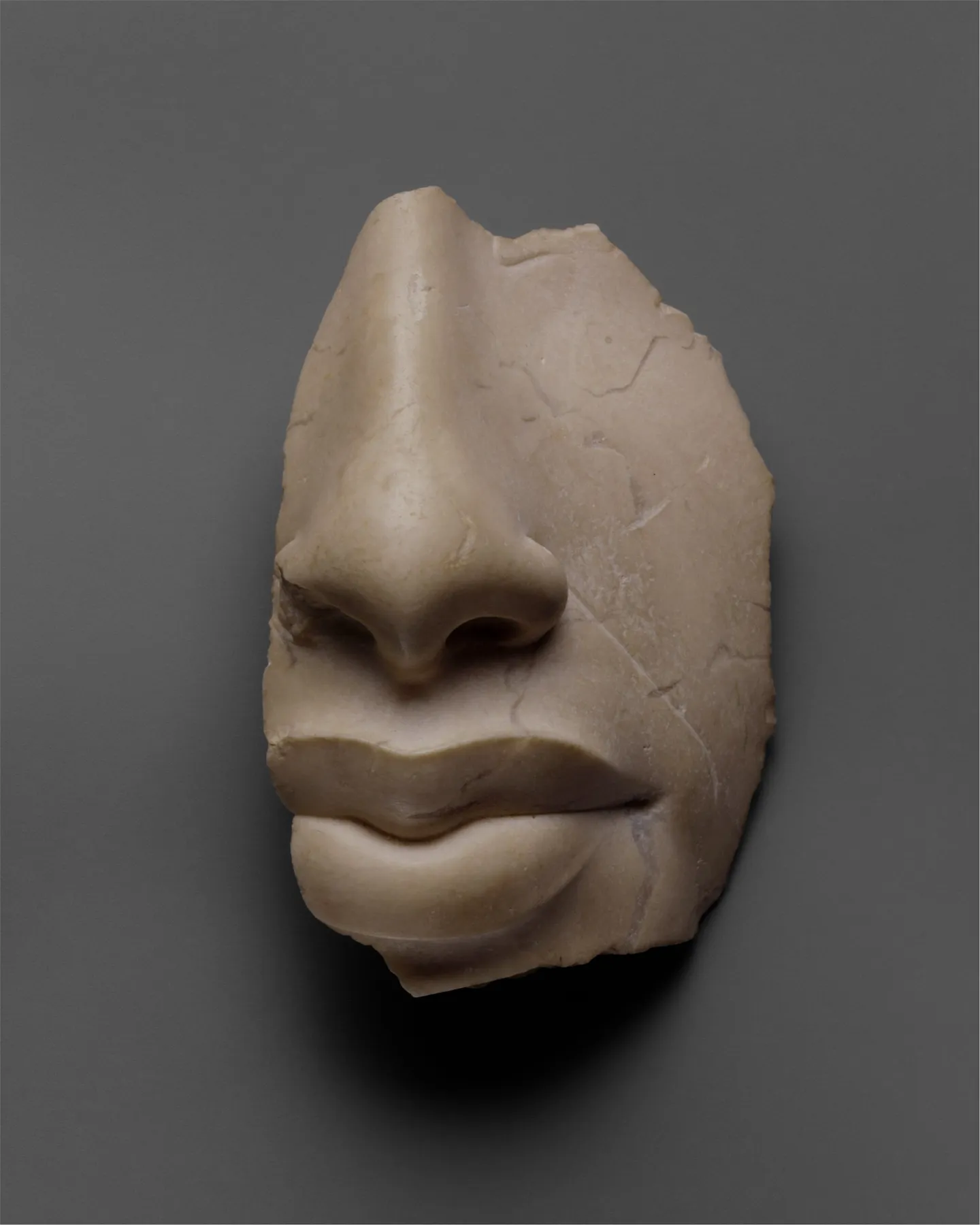
The first object in the show is a nose and a pair of lips. They belonged to a portrait of the pharaoh Akhenaten, carved more than 3,000 years ago, and nothing else of the face survives. Broken, at Palazzo Strozzi until 24 January 2027, is built around pieces like this: more than 80 sculptures and fragments that are no longer whole, and an argument that many of them are more powerful for it.
The exhibition is a collaboration between Fondazione Palazzo Strozzi and the National Gallery of Art in Washington, curated by C. D. Dickerson III and Andrew Sears of the National Gallery with Arturo Galansino, director of Palazzo Strozzi. Loans come from the Metropolitan Museum of Art, the Louvre, the British Museum and the Museo Nacional de Antropología in Mexico City. The range is wide: ancient Egypt, Etruria, Greece and Rome, and premodern works from what are now Mexico, Mali, Peru and Cambodia, alongside Renaissance masters and living artists. The works are not hung in date order. Nine rooms are arranged by theme, so a Mesopotamian torso can share a wall with a sculpture made three years ago.
Faces and bodies
The first rooms look at what a fragment does to a face or a body. Giovanni Pisano’s pieces from the funerary monument of Margaret of Brabant, carved in 1312–14, are all that remain of a tomb that was destroyed with its church in Genoa in 1805. An Akkadian torso of a ruler, made around 2300 BCE, has been put back together from about 200 pieces of dark gabbro. Michelangelo’s terracotta model of a nude woman, from 1553, is a working study that has come down to us incomplete. Rodin went further. His Walking Man has no head and no arms, and he exhibited it that way on purpose.
What breaks a sculpture
The middle of the show asks how things come to be broken, with rooms on iconoclasm, on war and colonialism, and on nature. Antonio Canova’s Bust of Catholic Religion, carved in 1815, was hit by artillery fire during the First World War. A fragment of a kneeling figure in terracotta comes from the inland Niger Delta in Mali, made between the eleventh and fifteenth centuries. Closest to home is a medieval wooden Christ Carrying the Cross, badly damaged in the Florence flood of November 1966 and since restored. A room that follows makes the distinction the curators care about: a body reassembled, not remade.
The fragment as a method
For the contemporary artists, breaking is a choice. Francesco Vezzoli’s Swan, from 2023, joins the marble head of the emperor Marcus Aurelius to an armless female bust from the late sixteenth century. Julius von Bismarck’s Elephant in the Room spoofs the equestrian statues of Marcus Aurelius and of the artist’s ancestor Otto von Bismarck: it slowly collapses into sections and then stands back up. Danh Vo, who has spent years cutting up and recombining classical and Christian sculpture, has a room of his own. The show ends with Paul Pfeiffer’s Incarnator, a set of carved wooden body parts modelled on Justin Bieber, arranged to recall the Crucifixion.
Mark Manders in the courtyard
You do not need a ticket to see the most recent work. In the Renaissance courtyard, the Dutch artist Mark Manders has installed Tilted Head, a colossal head split down the middle, made for this exhibition. Manders’ sculptures usually look like wet clay wrapped in wooden boards, as if the work had been interrupted. Set against the stone of a fifteenth-century palace, the effect is of an ancient find that has only just come out of the ground.
Plan your visit
Broken runs until 24 January 2027. Palazzo Strozzi is open daily from 10:00 to 20:00, and until 23:00 on Thursdays. Tickets are sold on the Palazzo Strozzi website. In spring 2027 a new version of the exhibition travels to the National Gallery of Art in Washington.
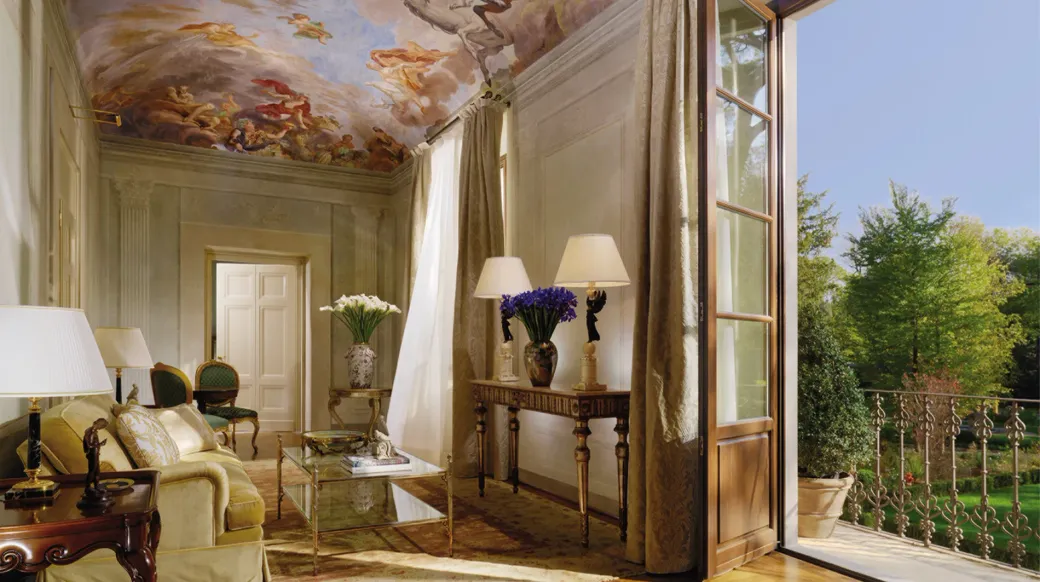
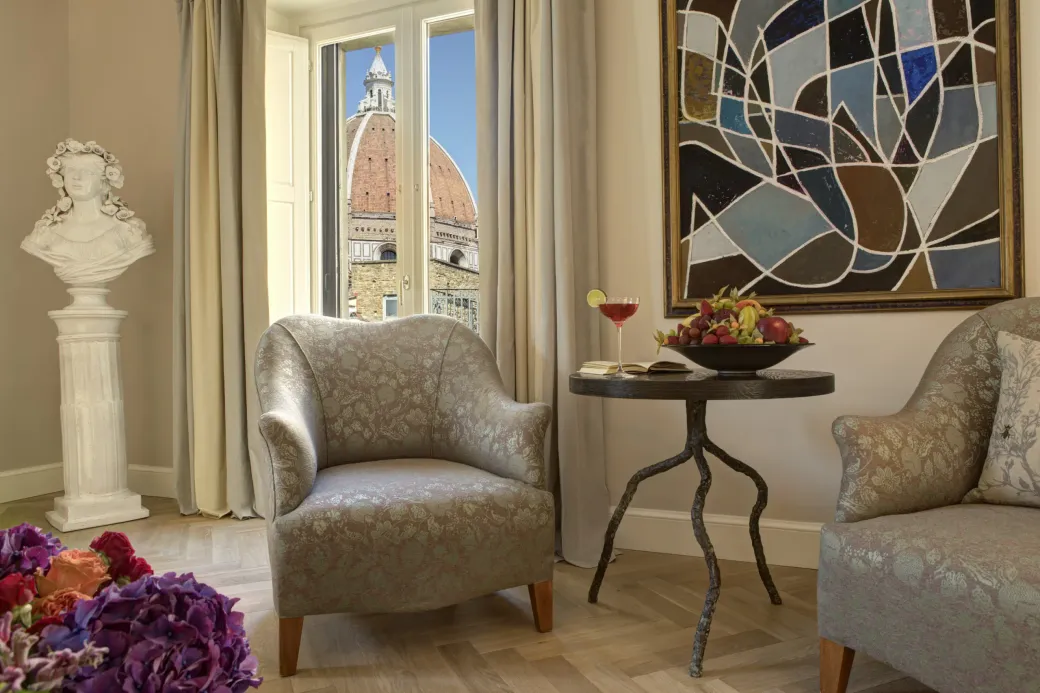
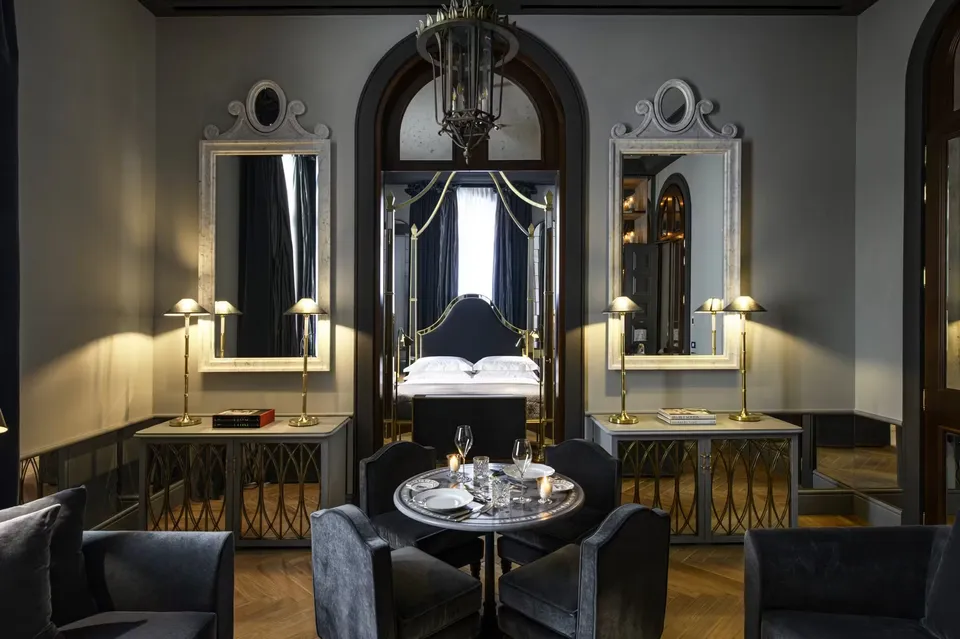 Stay nearby · 1 of 10 in Florence
Helvetia & Bristol Firenze
Florence’s first grand hotel, a 19th-century townhouse in the historic centre.
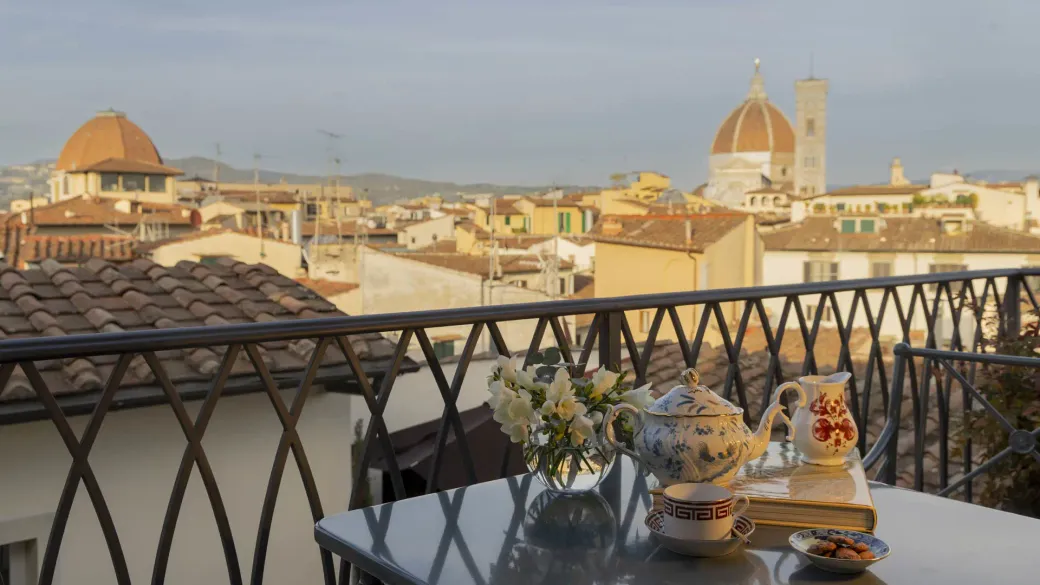
 Stay nearby · 1 of 10 in Florence
Il Tornabuoni
A refined retreat on Via de’ Tornabuoni, with a rooftop terrace overlooking Florence.