The Medici Villas
Between the fifteenth and seventeenth centuries, the Medici family built a network of country residences that changed not only the Tuscan landscape but the idea of the villa itself. They were not merely retreats, though hunting, rest, and seasonal pleasure all played their part. They functioned as centres of agricultural and administrative power, as symbols of territorial dominion, and as testing grounds for architectural ideas rooted in the humanist principles of the Renaissance. In 2013, twelve of these properties received collective inscription on the UNESCO World Heritage List, a recognition of their shared significance as places of enduring value to humanity.
The collection spans two centuries of building, from the earliest medieval strongholds in the Mugello hills, the ancestral Medici heartland, and on to the refined Renaissance residences commissioned by Lorenzo il Magnifico, and on to the elaborate grand-ducal estates ordered by Cosimo I and his successors. Designed in harmony with their surroundings and furnished with gardens, statuary, and hydraulic invention, they established a model that European courts would imitate for generations. The villas stretch from Florence's city centre outward to Fiesole, the Mugello valley, Prato, Lucca, and the Valdinievole, a geography that maps the reach of Medici power as much as it records their taste.
Boboli Gardens
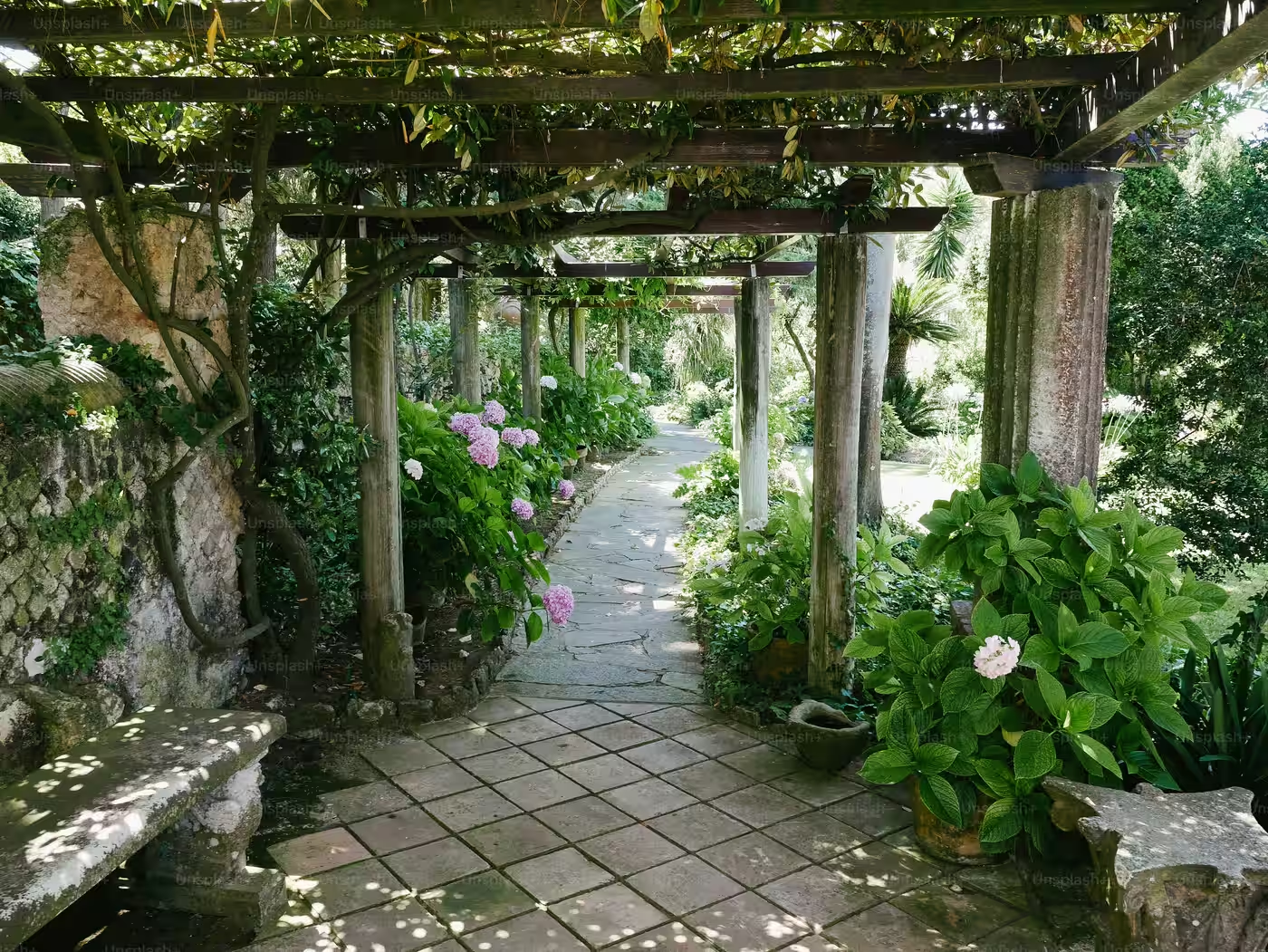
The Boboli Gardens represent the full ambition of the Italian-style garden: a landscape ordered by reason, enriched with grottoes, fountains, and sculpture, and open to the sky in a way that makes it feel, even now, more like theatre than park. First arranged by the Medici, with Niccolò Tribolo laying out the original plan in the sixteenth century, the gardens became the template that much of Europe would follow. Opened to the public in 1766, they remain among the finest open-air sculpture collections in Italy: Roman antiquities alongside works by Baccio Bandinelli and Giambologna, set against the amphitheatre where Medici court spectacles once played out. The Grotta del Buontalenti, designed by Bernardo Buontalenti, once housed the original Michelangelo Prisoners, now replaced by casts.
Medici Villa of Petraia
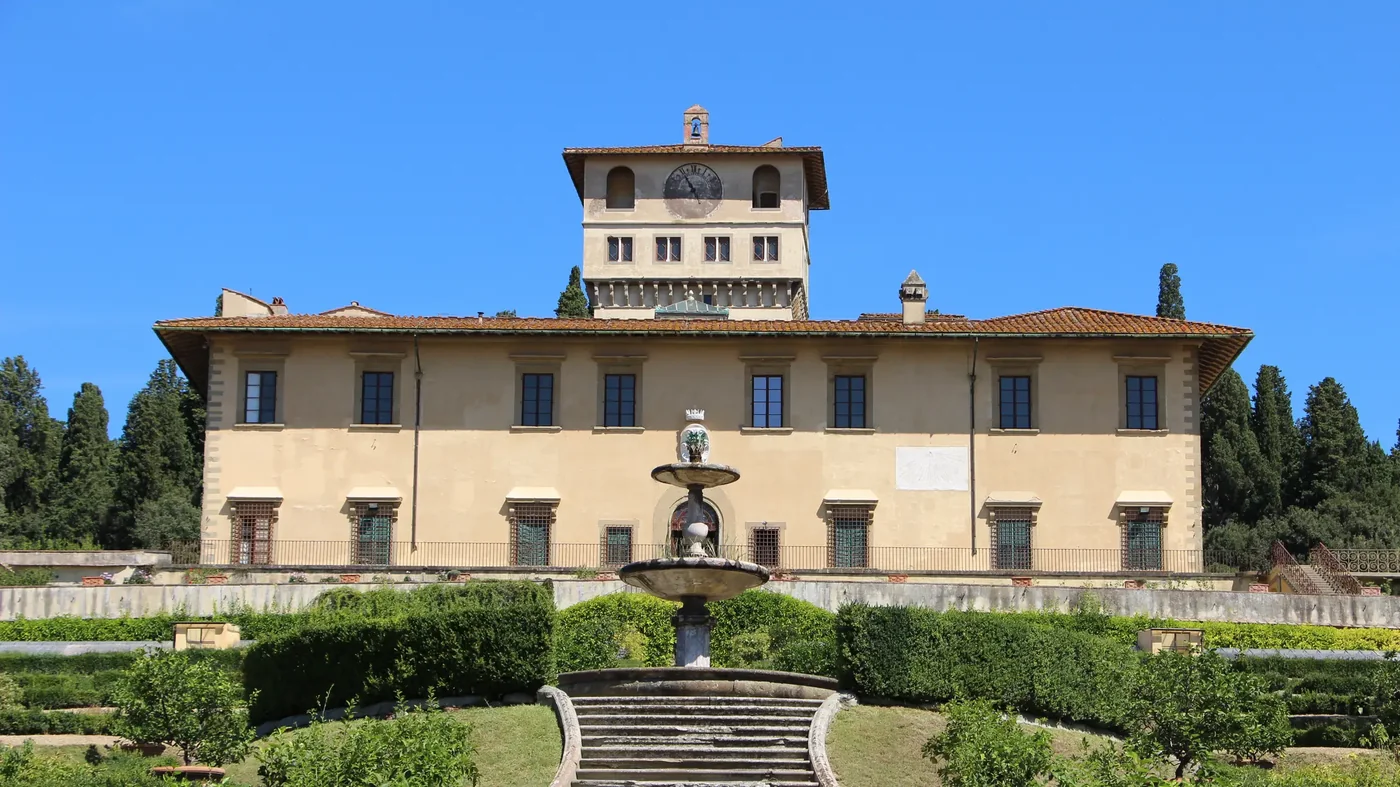
A few kilometres from the city centre, the Villa della Petraia occupies a hillside that looks out over Florence with quiet authority. An ancient fortified structure, the tall tower still standing, it was enlarged and remodelled into a grand-ducal residence in the final decades of the sixteenth century, with terraced gardens laid out across the surrounding land. Inside, the courtyard is lined with frescoes dating from the late sixteenth and early seventeenth centuries, and was covered over with a vaulted glass roof in the nineteenth century, when Vittorio Emanuele II used the villa as a personal residence during Florence's brief years as capital of Italy. Much of the current furnishing dates to that period.
Garden of the Medici Villa of Castello
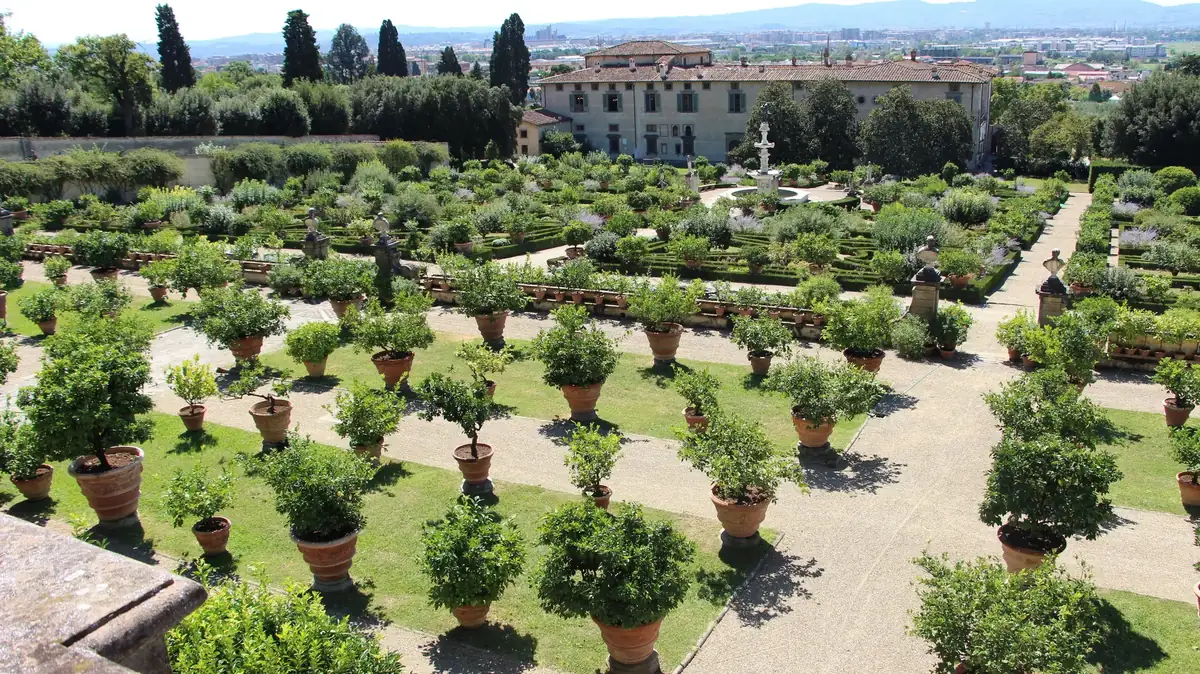
One of the oldest suburban properties the Medici family owned, the Villa di Castello was acquired in 1477. When Cosimo I came to power, he commissioned Niccolò Tribolo to create a garden programme of fountains, grottos, and statuary designed to celebrate Medici rule through allegory. The villa itself is not currently open to visitors, but the garden is, and it rewards the walk. Rare plants and citrus trees fill the terraces; ancient and Renaissance sculptures punctuate the paths; and the Grotta degli Animali, the Grotto of Animals, retains its extraordinary decorative programme, though the water tricks that once animated it are long gone.
Villa Medici in Fiesole
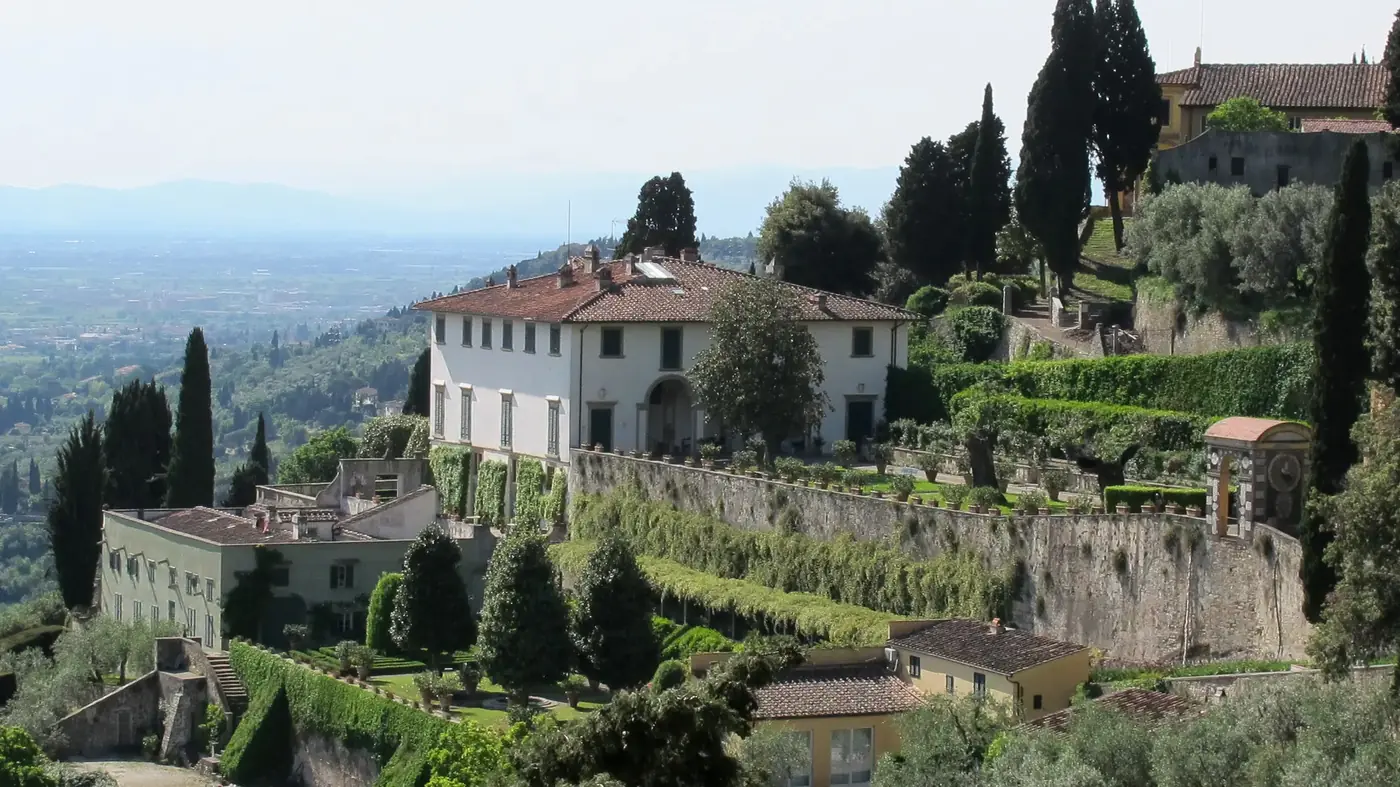
High above Florence, the Villa Medici at Fiesole commands the valley below from a position of studied elegance. Built between 1451 and 1457 for Giovanni, son of Cosimo il Vecchio, it was most likely designed by Michelozzo, with contributions from Bernardo Rossellino and Antonio Manetti, though attribution remains a matter of scholarly debate. What is beyond question is its significance: this is the first country residence conceived not as a fortified structure but as an open, harmonious dwelling, looking out on its landscape rather than defending itself against it. It also holds a quiet botanical distinction: the cultivation of citrus fruits in Tuscany, which would become characteristic of all Medici gardens, began here.
Villa del Poggio Imperiale
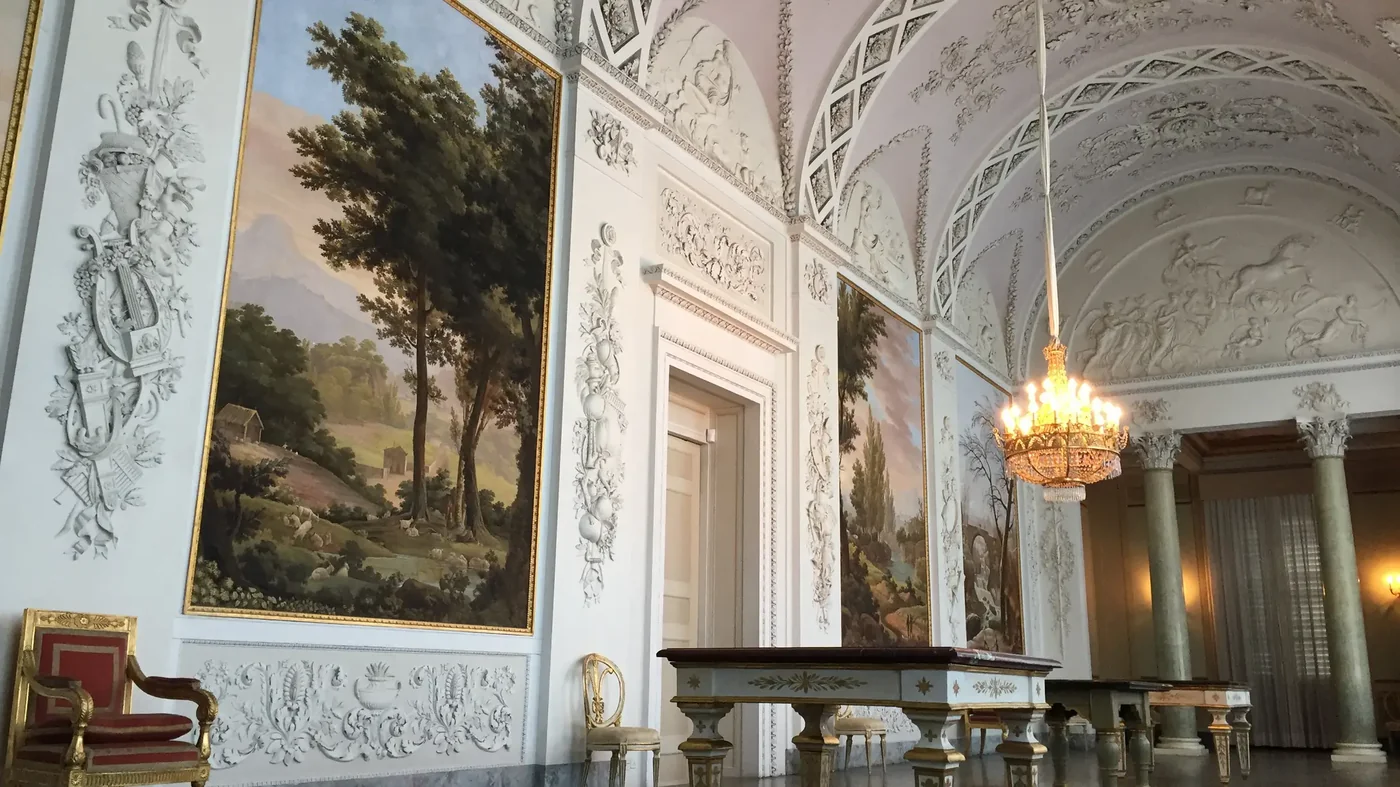
Acquired by the Medici in the sixteenth century and subsequently expanded and remodelled through the Baroque period, the Villa del Poggio Imperiale served as a grand-ducal residence after the Pitti Palace. It became associated in particular with the grand duchesses, Maria Maddalena of Austria and later Vittoria della Rovere, who each left their mark on the building. Today the neoclassical facade presents a face to the road that the earlier Medici owners would scarcely have recognised. The villa can be visited occasionally.
Pratolino Medici Park
The park at Pratolino has had a more complicated history than most. In the 1570s, Francesco I de' Medici commissioned Bernardo Buontalenti to build a villa and lay out gardens of extraordinary invention: grottoes, water automata, and statuary that drew visitors from across Europe, earning it the name "the garden of marvels". The villa is gone, demolished in the early nineteenth century, but the park survives. After Francesco's death it passed through several hands before being purchased by the Russian Prince Paul Demidoff, who restored what had endured. The centrepiece is Giambologna's colossal Apennine figure, half-emerging from the earth above a small lake, one of the most extraordinary garden sculptures in existence. The chapel built by Buontalenti in 1580 remains intact. The park is open from April to October, and is well suited to families: wide lawns, a playground, and the kind of space that asks to be wandered.
Villa del Trebbio
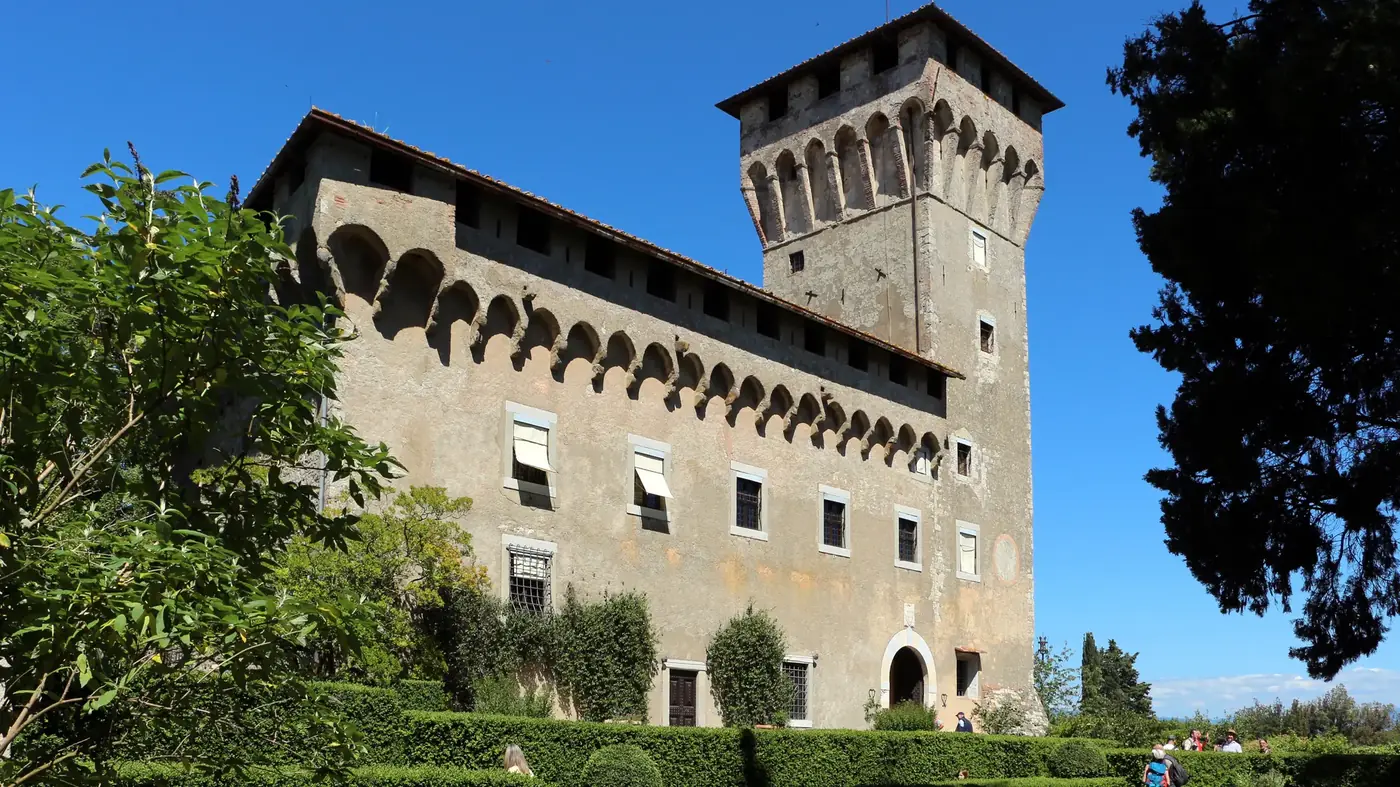
The earliest Medici villas speak a different language from the humanist residences that came later. The Villa del Trebbio, in the Mugello hills, was acquired in the fourteenth century, when the family's fortunes were still rising. Built on the ruins of a Lombard tower, it retains the character of its medieval origins: a large square tower closely joined to a solid residential block, its exterior walkway and machiolated crowning preserving the defensive vocabulary of an earlier age. Michelozzo brought some refinement to the window openings and added a glazed loggia around the internal courtyard, but the overall impression is one of medieval conviction. Set on a hilltop above the Mugello plain, it surveys its territory with an authority that has nothing to do with gardens. Currently closed to the public.
Villa di Cafaggiolo
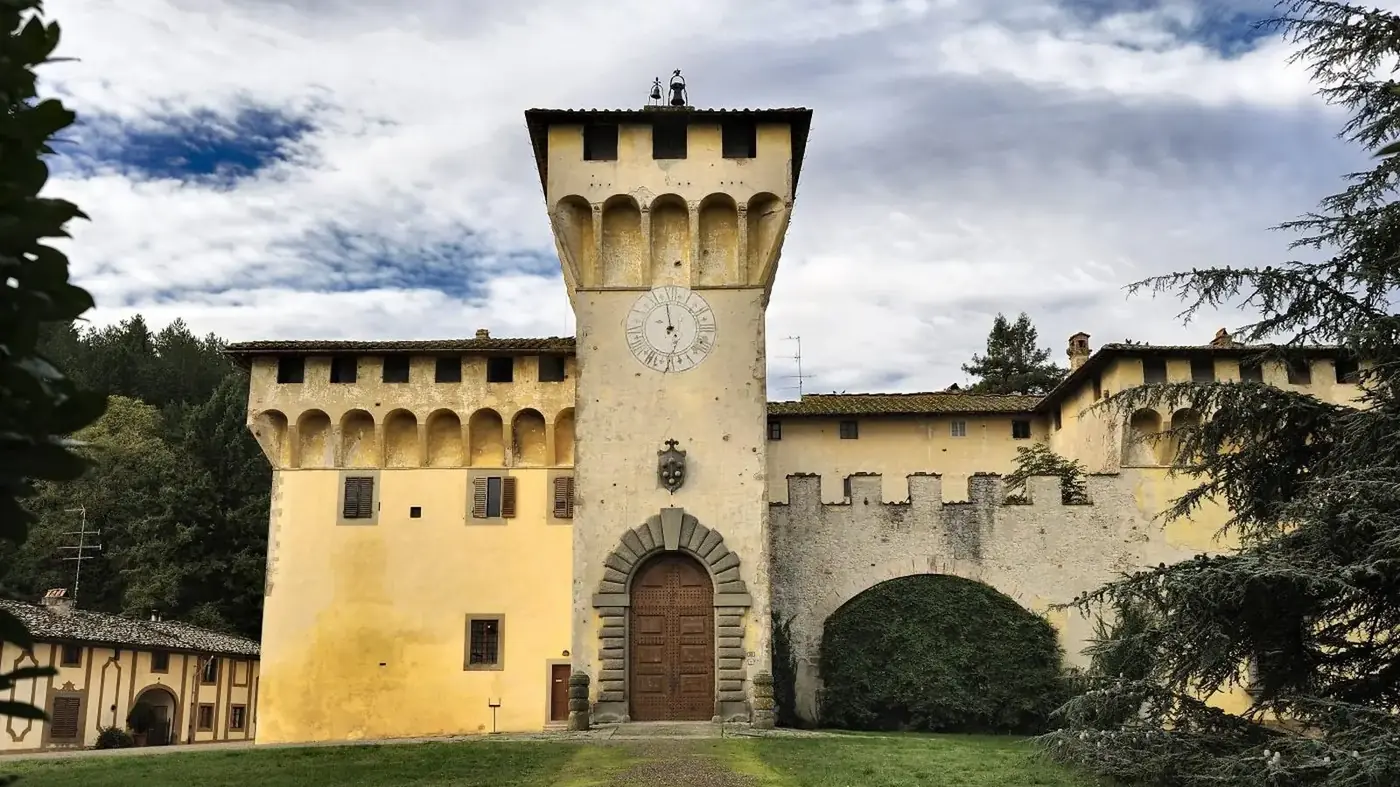
A short distance away in the same Mugello valley, the Villa di Cafaggiolo is the ancestral seat from which the Medici's rise truly began. Also acquired in the fourteenth century, it began as a medieval farmstead. In 1451, Cosimo il Vecchio asked Michelozzo to transform it into a summer residence fit for a ruling dynasty, a task carried out while preserving the fortress-like massing: asymmetric towers, machiolated battlements, and two irregular courtyards formed by the accretion of existing and new buildings around each other. It is the prototype of the early fortified Medici villa, the transitional point between medieval stronghold and Renaissance country house. At the time of writing, undergoing restoration.
Villa Medicea di Cerreto Guidi
Built as a hunting lodge for Cosimo I de' Medici from 1556, the Villa di Cerreto Guidi sits near the marshes of Fucecchio, a landscape once rich in game. Buontalenti's authorship of the design is most visible in the building's most distinctive feature: a pair of monumental brick staircases, the Ponti Medicei, which flank the entrance and give the villa an unusually ceremonial approach for a structure conceived around the chase. Inside, the upper floor houses the Historical Hunting and Territorial Museum, dedicated to weapons and hunting culture from the medieval period through to the modern age, alongside sixteenth- and seventeenth-century portraits of Medici figures and a series of grand-ducal tapestries.
Palazzo Mediceo di Seravezza
The Palazzo di Seravezza stands apart from the other Medici villas in both geography and tone. Commissioned by Cosimo I and built under the direction of David Fortini and Bartolomeo Ammannati to oversee the nearby extraction of white marble and metals, it was a building with a utilitarian brief that nonetheless produced something of considerable elegance. It later became a royal lodging: Ferdinando I and his wife Cristina di Lorena stayed here, and her patronage accounts for the external chapel designed by Buontalenti. Now owned by the municipality of Seravezza, it is regularly open to visitors.
Medici Villa of Poggio a Caiano
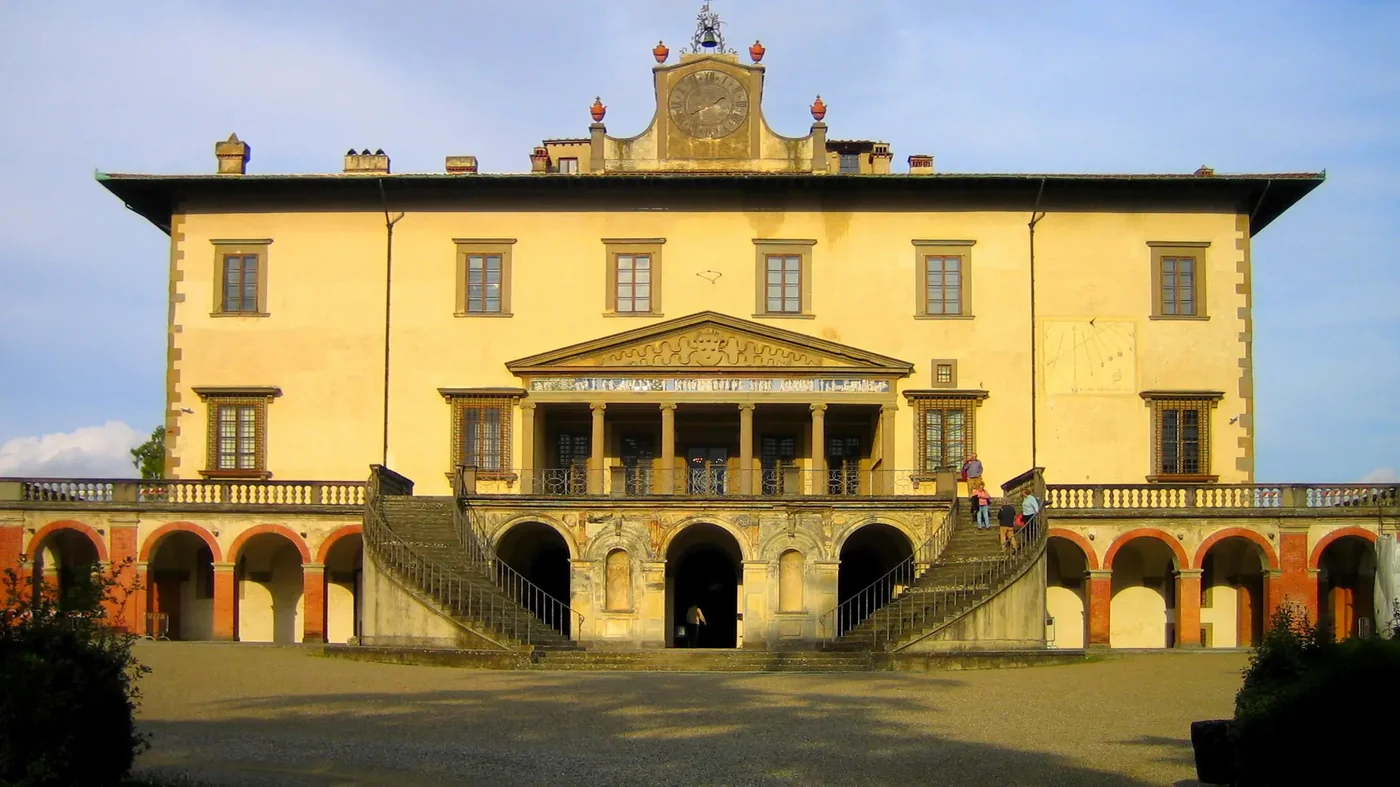
Of all the Medici villas, Poggio a Caiano is perhaps the most complete expression of humanist architectural intention. Commissioned by Lorenzo il Magnifico and designed by Giuliano da Sangallo, it translates the lessons of Leon Battista Alberti: symmetry, proportion, and the integration of building with landscape, into a form that reconciled classical principles with the character of the Tuscan countryside. The central temple-fronted loggia, approached by sweeping double staircases, was unlike anything built before it. The garden, later entrusted to Tribolo and Fortini by Cosimo I, was laid out on the same rational principles. A UNESCO World Heritage Site since 2013, the villa is regularly open to visitors.
Medici Villa di Artimino
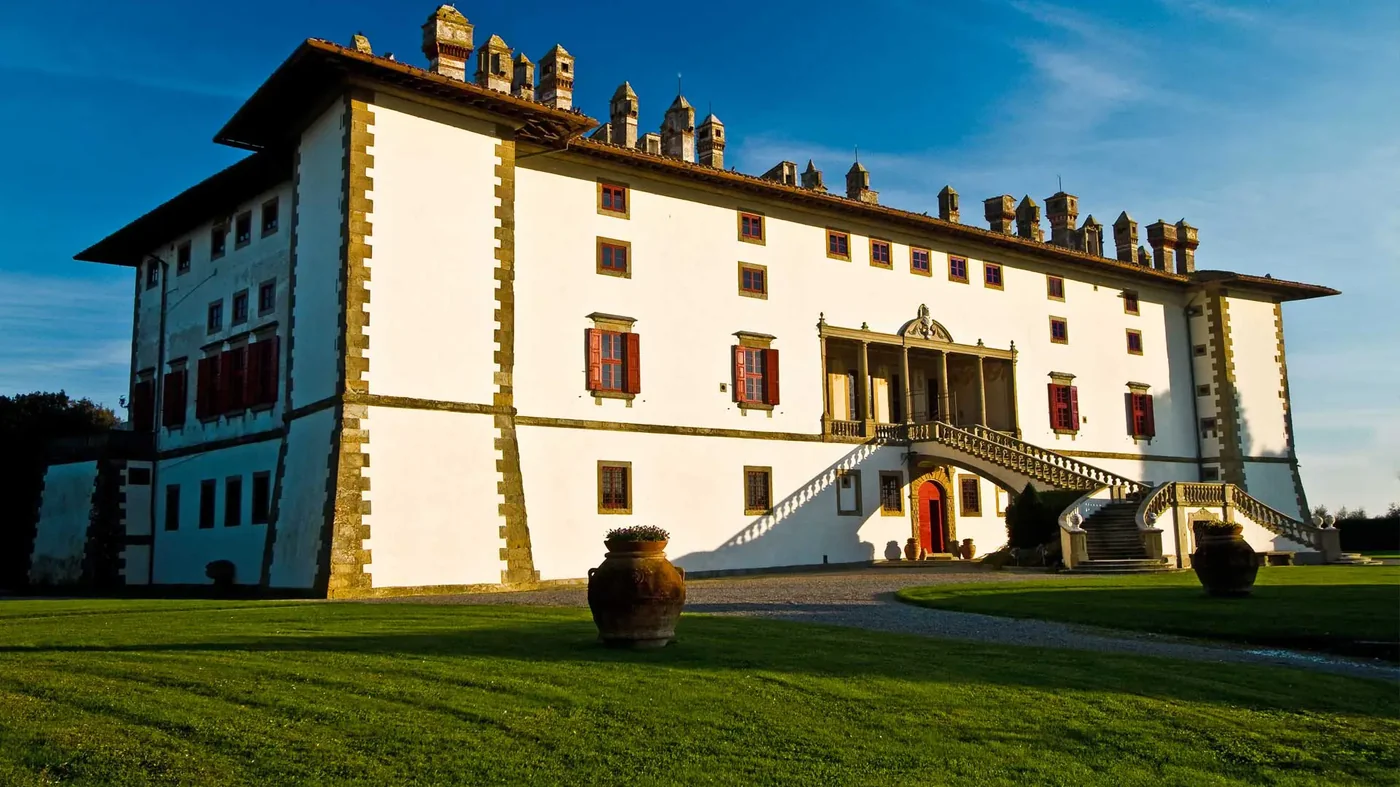
Built for Grand Duke Ferdinando I de' Medici by Bernardo Buontalenti in the final decades of the sixteenth century, the Villa di Artimino is immediately recognisable by the exceptional number of chimneys punctuating its roofline, earning it the popular name "the villa of a hundred fireplaces". The interior was decorated by Passignano and Bernardino Poccetti, and the lunette series depicting all the Medici villas, painted by Justus van Utens, offers one of the most vivid documentary records of how the entire collection appeared at its peak. In the ancient kitchen, a rotisserie mechanism reputed to have been designed by Leonardo da Vinci has survived. The villa can be visited by appointment.
Villa La Magia
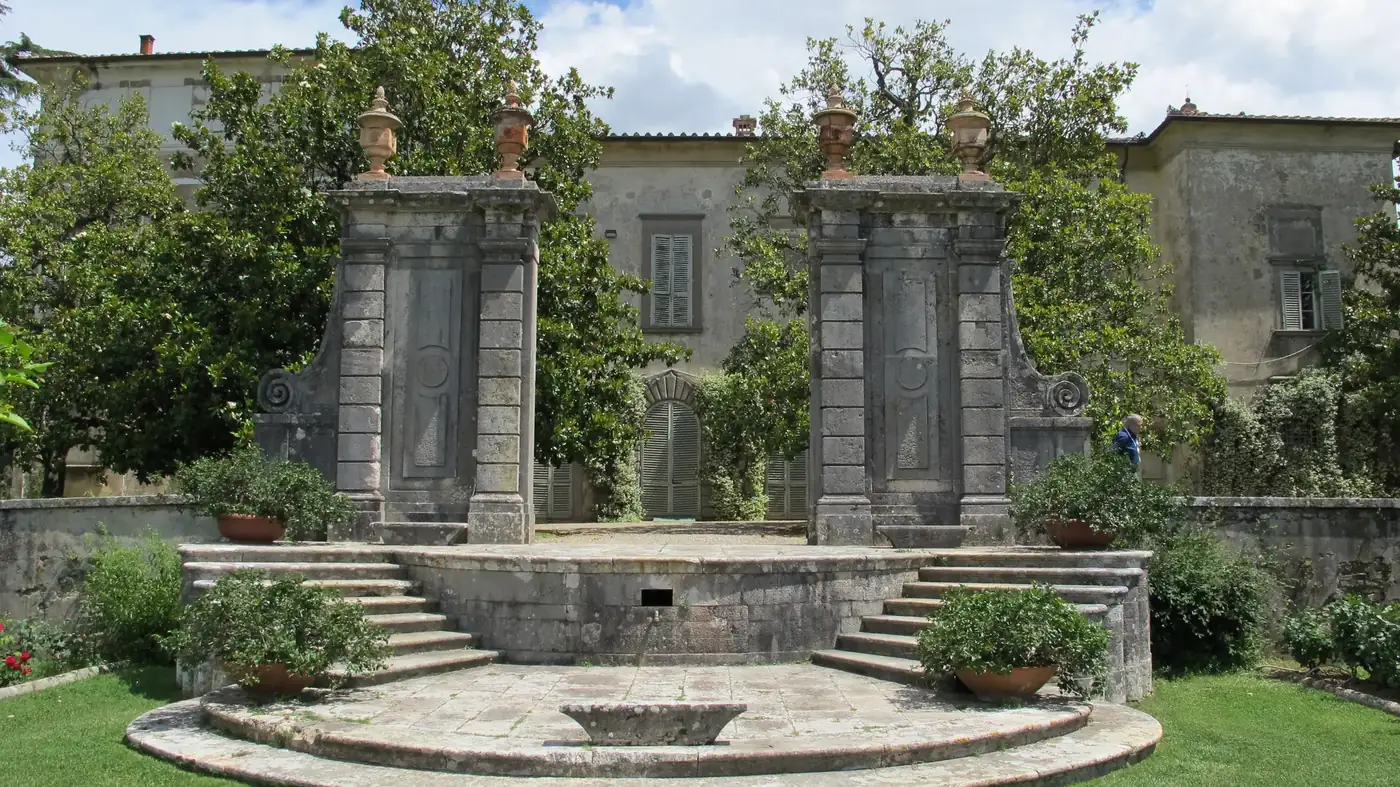
Villa La Magia, near Quarrata, has accumulated centuries of transformation without losing its coherence as a Renaissance residence. One of its most significant moments came under Grand Duke Francesco I de' Medici, who commissioned Bernardo Buontalenti to carry out renovations in the 1580s and ordered the construction of an artificial lake on the grounds. The property subsequently passed through several distinguished families: Attavanti, Ricasoli and Amati, before coming into the possession of Quarrata Town Council in 2000. It is regularly open to visitors.
Care to share?
Copy story linkLooking for a place to stay in Florence?
Our handpicked Florence collection is a click away.
Explore Florence staysMore Florence stories
Florence on a Plate: 7 Restaurants for Every Appetite
Seven tables across Florence, from a Michelin three-star dining room to a hilltop garden and a terrace above the Arno. Our personal selection of the city's most worthwhile restaurants, chosen for consistent quality, local credibility, and a genuine commitment to the food of this region.
The Rothko Exhibition
Seventy works at Palazzo Strozzi spanning Rothko’s entire career, from early figurative experiments to the monumental colour-field paintings of his final years. One of the most comprehensive surveys of his work ever assembled, and among the most significant exhibitions Florence has seen.